
What should one do when things are dark …. Pope Francis says to hope and hold on….
According to Vatican Radio, during his
morning Mass at Casa Santa Marta today, Pope Francis expressed this as
he urged Christians to be courageously anchored in hope, and never just
‘still.’
Francis drew his inspiration from today’s
Letter to the Hebrews, which spoke about having courage to go forward
and how this ought to be our attitude toward life, just like the
attitude of those who train for victory in the arena.
No Living in the Fridge
The Letter, the Pope also pointed out,
also speaks of the laziness,the opposite of courage, which Francis
summarized as: “Living in the fridge, so that everything stays the same”
Saying the life of a Christian is a
“courageous life,” Francis criticized “Lazy Christians” who do not have
the will to go forward, make things change and be new.
“They are lazy, “parked” Christians: they
have found in the Church a good place to park,” Francis said, noting
when he says Christians, he is also talking about laity, priests,
bishops, “everyone.”
“But there are also parked Christians! For
them, the Church is a parking place that protects life, and they go
forward with all the insurance possible. But these stationary
Christians, they make me think of something the grandparents told us as
children: beware of still water, that which doesn’t flow, it is the
first to go bad.”
Hope, Francis continued, is what makes Christians courageous, while those who are lazy are “in retirement.”
No Life of Retirement
“It is beautiful to go into retirement
after many years of work, but, he warned, “spending your whole life in
retirement is ugly!”
Hope, on the other hand, is the anchor that we cling to in order to keep fighting, even in difficult moments.
“Hope is struggling, holding onto the
rope, in order to arrive there. In the struggle of everyday, hope is a
virtue of horizons, not of closure! Perhaps it is the virtue that is
least understood, but it is the strongest. Hope: living in hope, living
on hope, always looking forward with courage.
Hold on
‘Yes, Father – anyone of you might say to
me – but there are ugly moments, where everything seems dark, what
should I do?’ Hold onto the rope, and endure.”
Francis said that it’s normal to make mistakes, so fear of erring shouldn’t deter us from ‘moving.’
Pope Francis concluded, inviting us to ask
ourselves if we are closed Christians, or Christians of the horizons;
and if in ugly moments we are capable of enduring, with the knowledge
that hope does not disappoint “because I know that God does not
disappoint.”
“Let us ask ourselves the question: How am
I? How is my life of faith? Is it a life of horizons, of hope, of
courage, of going forward; or a lukewarm life that doesn’t even know to
endure ugly moments?”
“May the Lord give us this grace,” Francis said, to overcome our selfishness, and raise our heads to Him to move forward.
|
||||

Answered by Legionary of Christ Father
Edward McNamara, professor of liturgy and dean of theology at the Regina
Apostolorum university.
Q: In the sacramentary, after the votive
Mass of the Sacred Heart of Jesus, it reads, “As a votive Mass, the Mass
of the Solemnity of the Sacred Heart of Jesus may also be used ….” As a
priest I’m wondering, is it an option for us to use, as a votive Mass,
the Mass for the Memorial of the Immaculate Heart of Blessed Virgin
Mary, for example, on a first Saturday of the month? (I’m aware that
there’s a Mass to the Immaculate Heart of Mary in the Collection of the
Masses of the Blessed Virgin Mary, but I think that the prayers are
different from the Memorial of the Immaculate Heart of the Blessed
Virgin Mary, so am wanting to know my legitimate options.) Also, besides
the Collection of Masses of the Blessed Virgin Mary, what are our other
options for Masses of the Blessed Mother for Saturdays? That is, I’ve
heard of a priest who uses the prayers from the Immaculate Conception
for Saturdays, but I was not aware of that as an option. — F.F.,
Hopedale, Ohio
A: I would say that, since the Roman
Missal itself indicates when alternative formulas may be used for
specific votive Masses, then the option should not be presumed unless
specifically given as a detailed choice has been made.
It must also be recalled that votive
Masses are, by definition, “votive,” that is, an option is offered under
certain conditions to celebrate a Mass that does not correspond to the
office of the day. The norms outlining the conditions of these
celebrations are found in the General Instruction of the Roman Missal.
To wit:
“374. In cases of serious need or pastoral
advantage, at the direction of the diocesan Bishop or with his
permission, an appropriate Mass may be celebrated on any day except
Solemnities, the Sundays of Advent, Lent, and Easter, days within the
Octave of Easter, the Commemoration of All the Faithful Departed (All
Souls’ Day), Ash Wednesday, and Holy Week.
“375. Votive Masses of the mysteries of
the Lord or in honor of the Blessed Virgin Mary or of the Angels or of
any given Saint or of all the Saints may be said for the sake of the
faithful’s devotion on weekdays in Ordinary Time, even if an optional
memorial occurs. It is not, however, allowed to celebrate as Votive
Masses, those that refer to mysteries related to events in the life of
the Lord or of the Blessed Virgin Mary, with the exception of the Mass
of the Immaculate Conception, since their celebration is an integral
part of the unfolding of the liturgical year.
“376. On obligatory Memorials, on the
weekdays of Advent up to and including December 16, of the Christmas
Season from January 2, and of the Easter Season after the Octave of
Easter, Masses for Various Needs, Masses for Various Circumstances, and
Votive Masses are as such forbidden. If, however, required by some real
need or pastoral advantage, according to the judgment of the rector of
the church or the priest celebrant himself, a Mass corresponding to such
a need or advantage may be used in a celebration with a congregation.
“377. On weekdays in Ordinary Time when
there is an optional Memorial or the Office is of the weekday, it is
permissible to use any Mass or oration for various circumstances, though
not from the Ritual Masses.
“378. It is especially recommended to
celebrate the commemoration of the Blessed Virgin Mary on Saturday,
because it is to the Mother of the Redeemer in the Liturgy of the Church
that in the first place and before all the Saints veneration is given.”
No. 374 above gives the general criteria
as to why certain formulas are not allowed as votive Masses. Thus, for
example, it allows the formula for the Immaculate Conception to be used
as a votive Mass but not the Assumption.
As our reader mentioned, there are some votive Masses that specifically allow for other formulas to be used. These are:
The Most Holy Eucharist. For this votive
Mass the formula for “Our Lord Jesus Christ, the Eternal High Priest”
and that of the solemnity of the Most Holy Body and Blood of Christ may
also be used.
As mentioned above, the formula for the solemnity of the Most Sacred Heart may be used as an alternative votive Mass.
For the Masses of the Blessed Virgin Mary,
as well as the four Masses offered in this part of the missal, the
rubrics state that “any Mass from the Common of the Blessed Virgin Mary
is used, in accordance with the various times of the year.” The common
offers eight Mass formulas for ordinary time and one each for the four
major liturgical seasons.
To this may be added many of the Masses
found in the collection of Masses of the Blessed Virgin Mary. Not all
may be used generally, since some, especially those proposed for the
major liturgical seasons of Advent, Christmas, Lent and Easter, are
primarily for use in Marian shrines which have the privilege of being
able to celebrate such Masses throughout the year.
For the votive Mass of the Holy Angels, the formula of the Guardian Angels on October 2 may also be used.
For St. Joseph, the rubric indicates that
“If appropriate the Mass of the Solemnity … or of Saint Joseph the
Worker may also be used.”
For the other votive Masses there is no
indication even when a feast exists. Thus there is a votive Mass for
Saints Peter and Paul, and a separate Mass for Peter and one for Paul,
but no indication that the formulas of the solemnity of Saints Peter and
Paul, the feast of the Chair of St. Peter or that of the Conversion of
St. Paul may be used.
Likewise there is a formula for the votive
Mass of the Most Holy Name of Jesus but no indication that the formulas
for the memorial of the Holy Name on January 3 may be used.
I do not think this can be attributed to
an oversight and would therefore conclude that if the option is not
specified, then it does not exist.
Priests are hardly deprived of riches in
the prayers of the missal. The possibilities are ample; indeed, a priest
could use a different Marian Mass almost every liturgically free
Saturday for almost an entire year.
* * *
Readers may send questions to
zenit.liturgy@gmail.com. Please put the word “Liturgy” in the subject
field. The text should include your initials, your city and your state,
province or country. Father McNamara can only answer a small selection
of the great number of questions that arrive.
|
||||
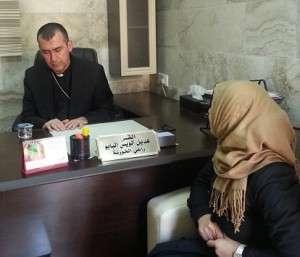
The advance continues of the Iraqi army to
liberate Mosul, second city of Iraq and bulwark of the Islamic State.
The Special Forces that assaulted the government complex of the province
of Nineveh, the University district, have reached another bridge over
the Tigris, called Hurriya. At this point, close to 80% of Mosul has
been liberated.
The Jihadists’ counterattacks, last flick
of the tail before the capitulation, were quickly repelled by the army.
Once the area of Islamic terrorists is liberated it will be imperative
to bring back the conditions for peaceful inter-religious coexistence.
The Christian community is almost completely extinct: in 2003, before
the U.S. invasion, the Christians of the Archdiocese numbered 35,000; in
2004 they were reduced to 3,000 and today, after ISIS’ aggression, they
are truly a meager presence.
ZENIT spoke with Archbishop Emil Shimoun
Nona about the future of this land. In 2010 he was called to take charge
of the Chaldean Archdiocese of Mosul, becoming the youngest Archbishop
of the Catholic Church. Today, he is Archbishop Emeritus and Bishop of
the Eparchy of Saint Thomas the Apostle of Sydney of the Chaldeans. In
Australia there are very many Iraqi Christian refugees, but Archbishop
Nona also keeps telephonic contacts with other families scattered in
other areas of the planet.
**
ZENIT: Excellency, in these hours, have you been able to discern the state of mind of the native Christians of Mosul?
Archbishop Nona: The
Christians of Mosul that are dispersed in the whole world and some also
in Iraq, are waiting anxiously for the Iraqi army to conclude the
liberation of the plain of Nineveh and the city of Mosul. After the
liberation of some Christian villages, they discovered what ISIS did to
our land: it destroyed almost all the churches and the majority of the
properties of Christians were ruined. The infrastructures of this area
virtually don’t exist anymore. Moreover, strong perplexities remain
about how it will be possible to govern this province once ISIS is
ousted, I mean to say from the political and economic point of view and
of ethnic and religious coexistence. There are several national and also
international interests that influence this objective. Hence,
Christians are looking at the future of this historically Christian area
with very little confidence.
ZENIT: In any case, however, have the refugees imagined that they would return to live in Mosul?
Archbishop Nona: I don’t
think Christians imagined that they would return. It is necessary to
create the adequate conditions for a fitting life, guaranteeing human
rights. Speaking frankly, there are not many Christians of Mosul in Iraq
now. A good part of them have now emigrated beyond the borders; there
is the desire to create a new life for themselves after having endured
persecution in their own country. The Christians of Mosul, refugees in
Iraq, are a small group. They have been suffering persecutions since
2003, they endured for years, but the conquest of the city by ISIS was a
decisive blow that induced the majority to flee.
ZENIT: There is talk of close to
100 places of worship damaged or demolished by ISIS in Mosul. Is it
possible to create a new Christian identity there?
Archbishop Nona: The
heart weeps; the churches represent the sign of our history and of our
participation in the Oriental civilization of Iraq. The Christian
identity exists in every place in which there are disciples of Jesus
Christ. It is not given by buildings but by men. Hence the answer is
yes; it will be possible to recreate again a Christian identity in
Mosul. The problem, as I said before, is that at present Christians and
their churches are lacking in Mosul. If in the future there is the
possibility to return, we will certainly be able to create again a
Christian identity.
ZENIT: Will it also be possible to re-establish a peaceful coexistence and a relationship of trust with the Muslims?
Archbishop Nona: I must
confess that it won’t be easy to return to a peaceful coexistence with
the Muslims in those areas. Unfortunately, ISIS enjoyed the support of
the civil society: many collaborated with the Jihadists in their actions
against the Christians; others even took part in the sacking of our
homes. A profound wound was created in the spirit of Christians. The
only condition to create coexistence would be the presence of a strong
Iraqi State, able to defend the rights of all, able to guarantee an
education hostile to the formation of a terrorist mentality.
ZENIT: What future do you imagine for Iraq? Patriarch Sako requested in a letter that “Iraqi national unity” be protected …
Archbishop Nona: I am
sincerely unable to imagine what the future will be for Iraq, because
its situation is very dramatic and complicated. After 2003, Iraq was
destroyed as a unitary and, in a certain sense, also a secular State.
However, the conditions of this debacle were created before that date,
by mistaken political policies. The only hope stems from the history of
this land: every time that Iraq has fallen, it has been able to raise
itself up again. Let’s hope that also this time it will be able to begin
again as a democratic and free state.
|
||||

Cows, goats, horses, donkeys, turkeys:
animals from the whole of Italy are in Saint Peter’s Square today, for
the tenth edition of the “Farm under the Sky,” set up in front of
Bernini’s colonnade by the Association of Italian Breeders (Aia) and the Italian Farmers’ Union, on the occasion of the feast of Saint Anthony the Abbot, Patron of Breeders.
Planned for the day are a series of
initiatives that go from Holy Mass officiated inside Saint Peter’s
Basilica by Cardinal Angelo Comastri and, as is traditional, concluding
with a blessing of men and animals in Pius XII Square. Completing the
program in this 2017 edition is the parade of horses and horsemen along
via della Conciliazione, with the presence of representations of the
Mounted Corps of the Armed Forces and Police (anticipated also is the
dog lovers unit) and of hundreds of groups of invited breeders.
Cardinal Comastri described the latter as
“the most beautiful part of Italy,” during the Mass in the Basilica.
Vatican Radio reported that in his homily, the Archpriest of Saint
Peter’s stressed that agriculture, and breeding
are the heart of so many territories of the Italian province, symbol at
the same time of tradition and innovation, yet, they are a patrimony
that is disappearing.
“You breeders
– and also the farmers – still have a sense of family: protect it!”
encouraged the Cardinal. Give time to your families, give time to your
children, pray in your homes as you did once because prayer filled the
home with joy and peace. You are custodians of these beautiful
traditions; do not lose them. Progress does not lie in abandoning these
beautiful traditions, but in recovering them … Look, I do not say it to
coddle you: you are the most beautiful part, perhaps also the most
honest of our Italy.”
|
||||

In relation to the events of recent weeks
concerning the Sovereign Military Order of Malta, the Holy See wishes to
reiterate its support and encouragement for the commendable work that
members and volunteers carry out in various parts of the world, in
fulfilment of the aims of the Order: tuitio fidei (the defence of the Faith) and obsequium pauperum (service to the poor, the sick and those in greatest need).
For the support and advancement of this
generous mission, the Holy See reaffirms its confidence in the five
Members of the Group appointed by Pope Francis on 21 December 2016 to
inform him about the present crisis of the Central Direction of the
Order, and rejects, based on the documentation in its possession, any
attempt to discredit these Members of the Group and their work.
The Holy See counts on the complete
cooperation of all in this sensitive stage, and awaits the Report of the
above-mentioned Group in order to adopt, within its area of competence,
the most fitting decisions for the good of the Sovereign Military Order
of Malta and of the Church.
|
||||

It was an intense and unforgettable
afternoon for Saint Mary’s parish at Setteville of Guidonia, gladdened
yesterday by Pope Francis’ visit. On his arrival at 3:40 pm, the Holy
Father first greeted the assistant parish priest, Father Giuseppe
Bernardino, 50, suffering from amyotrophic lateral sclerosis. After a
brief conversation and a silent prayer, the Pontiff administered to the
priest the Sacrament of the Anointing of the Sick.
In the next two hours, the Pope met the
different pastoral realities of the parish, among which were 30 elderly
and sick, including three children suffering from Down’s Syndrome; the
youngsters of catechesis, including many young people of the after
Confirmation course and a group of Scouts, with whom he chatted for over
half an hour, answering several questions.
Then Francis greeted 45 infants, baptized
in the course of 2016, and he reminded their parents of the importance
of the family. Then a meeting was held with some one hundred faithful
who help the parish priest, Father Luigi Tedoldi, in his pastoral work.
The Pontiff gave them some advice, pausing on the value of the mission.
After greeting the priests and five
seminarians of the parish, the Holy Father went to the sacristy to hear
the confessions of four penitents: a young couple, that look after the
Assistant Parish Priest, a young person of the course following
Confirmation, and the father of a sick child.
At 5:40 pm, the celebration of the Mass
began, during which the Pontiff gave an off-the-cuff homily, reflecting
in particular on the danger of “gossip” and of tittle-tattle, especially
in the parish environment.
Shortly before taking leave of the parish
community of Setteville of Guidonia, Francis greeted numerous faithful
gathered in front of the church since midday, who followed the visit on
giant screens set up for the occasion.
On the occasion of his meeting with
recently confirmed young people, the Pope thanked them for the designs
he received and reflected on a recurrent problem in parishes:
Confirmation as the “good-bye Sacrament,” after which many youngsters
stop frequenting the Oratories.
“’Post-Confirmation,’ if you will, is a
problem. And the fact that you are here, is a grace of the Lord. The
Lord has given you this grace to not make Confirmation the “good-bye”
Sacrament until the wedding day. So many years without a community … And
you have been chosen by the Lord to be a community. And this is great,”
commented Francis.
Another point addressed during the
conversation with youngsters was “Christian witness,” which, as such,
implies “talking about the Lord with joy,” where many tend to
do so “with a certain sadness.” Moreover, he added, it makes no sense to
go “every Sunday to Mass,” when then “I don’t talk to my parents, I’m
not interested in the elderly, I don’t help the poor, I don’t go to
visit the sick.” That is, it’s not enough to witness with the “word,”
the “heart” and “hands” are also necessary or – as a girl said,
intervening in the discourse – “giving oneself,” “opening oneself to the
other,” accepting him “as he is” and exercising “humility,
“forgiveness” and the “works of mercy.”
Once again, the Holy Father warned about
the risks of “proselytism,” understood as an attitude to “convince”
someone who doesn’t believe, and taking the first initiative. Instead,
it is opportune to “live in such a way that it is he or she who asks me:
‘Why do you live like this? Why did you do that?” and then yes, do
explain.” Therefore, it is important first to give example and witness,
so “the Holy Spirit enters the heart, makes it restless with the
testimony of Christians.”
Speaking of “forgiveness,” Francis
acknowledged that “it’s difficult but it can be done,” because although
often “the wound can heal […] the scar remains.” And he reminded that
forgiveness is certainly not “alms” but “is born in the heart and one
begins to treat that person as if nothing had happened …
Answering a question on what is the
greatest gift God has given us,” the Pontiff replied: it’s a great gift
to live in a family. And once again, he made use of the occasion to
refer to the role of grandparents, with whom – noted the Pope – many
youngsters speak more readily than with their parents. Hence this
advice: “talk with your grandparents; ask your grandparents questions.
Grandparents are the memory of life, they are the wisdom of life.”
The conversation then moved to the
difficult challenge of “never losing the faith through the highs and
lows of life.” Moments can happen, said the Pontiff, based on his
personal experience, that in certain circumstances the faith can be
“lost altogether or in part, but then in time you rediscover it.” “There
are dark days, everything is dark … I also went through such days in my
life,” confided Bergoglio, suggesting that one must “not get scared”
but “pray and have patience, and then the Lord makes Himself seen, He
makes us grow in the faith and go forward.”
In this context, Francis spoke about his
meeting on Saturday, during which he baptized 13 children affected by
the earthquake, with a desperate father who lost his wife in the quake
of last August 24.
“One thinks: can this man have faith after this tragedy?” wondered the Pope.
“Respect that darkness of the soul,” Pope
Francis suggested, “then it will be up to the Lord to reawaken the
faith. Faith is a gift of the Lord. It is for us only to protect it …
One doesn’t study to have faith; faith is received as a gift.”
|
||||
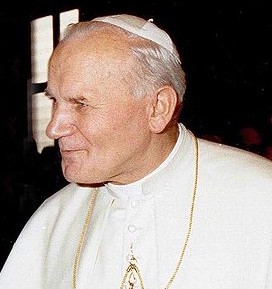
A new film from Ignatius Press, Our God’s Brother: The Story of St. Albert Chmielowski,
is the true story of a celebrated Polish artist and painter in the
1800’s who was a major inspiration for young Karol Wojtyla, later Pope
John Paul II. This film captures Albert Chmielowski’s conversion as he
became dissatisfied with his painting, and disillusioned about the
meaning of life, when he encountered many homeless and outcast beggars
in Poland that triggered his passion to help the poor. He gave up his
promising painting career and became a monk who served the poor for the
rest of his life. He founded a new religious community that would come
to be known as the Albertine Brothers and, later, the Albertine Sisters.
This
movie is based on a play written by Karol Wojtyla as a tribute to his
love for St. Albert, and his inspiration for Wojtyla in discerning his
own vocation to give up acting for the priesthood. When he became the
Pope, he said that anyone who wanted to understand his views should
study his plays, and on the topic of social justice, to study Our God’s Brother.
Wojtyla described the play not as a drama but a work of “inner
theater,” an attempt to penetrate the inner mystery of man. It is less
driven by action than by interior monologues and intellectual dialogues
that are more philosophical than psychological.
The
tension in the film isn’t just between art and God. There is also the
tension between the many poor and the wealthy few; between the two forms
of solidarity, Christian brotherhood and Marxism. Wojtyla’s personality
and philosophical views on man, faith and life are revealed through
Albert’s monologues with himself and the conversations with others about
the meaning of art and man.
Our God’s Brother,
done in English and directed by famed Polish filmmaker Krzysztof
Zanussi, has an outstanding cast that includes stars Christoph Waltz and
Scott Wilson. The DVD includes a special 16-page Collector’s Booklet
written by Catholic film critic Steven Greydanus.

No comments:
Post a Comment